

A long day and one for the breakaway.

Stage 1 review: the win for Alex Baudin, he went in the early breakaway with eight others and the group struggled to get more than two minutes with Decathlon-CMA CGM leading the chase although reduced by one rider when Matthew Riccitello abandoned, struck with food poisoning. The escapees looked doomed going into the final climb.
Baudin rode away from his companions and crucially did not lose any time on the chasing bunch. The big teams set a strong pace up the climb and dropped plenty but no squad would use up their riders. Baudin was out of reach as long as the main contenders watched each other.
He landed his biggest win, after taking the tricky Tour du Limousin before and is now building a palmarès when before he was noted for being disqualified from the Giro following a Tramadol test, an outcome that was never explained.

One back to the valley floor the group saw attacks fly and riders profiting from the lack of control, notably Netcompany pair Oscar Onley and Kévin Vauquelin. Lidl-Trek missed the moves completely and Mattias Skjelmose and Juan Ayuso made some big moves to chase, Paul Seixas had Léo Bisiaux up the road but later on joined in the chase and his effort along with Ayuso seemed to shrink the gap and being 30 seconds behind at one point it was down to 12 on the line led home with a powerful sprint by Isaac Del Toro.
The Route: 234km and 3,800m of vertical gain. This amount of climbing is worthy of a mountain stage but today’s route has nothing too severe, instead the distance over a long course just means the climbing adds up. The route sticks to hilly terrain, avoiding valley roads and plains.
The Col du Chatain at the start is the hardest climb of the day, irregular and on a narrow road. The next climb is more gentle amid farmland. Then it’s across to the Rhone valley.
The Col Robert Marchand is the subject of today’s postcard and comes mid-way between the Rhone valley floor and the unmarked Col des Barraques, this is about 50km of climbing and if it’s rarely steep, it’s long period of load on the pedals.
The Côte des Baraques is a tough climb with 200km done, there’s 3km at 8.5%.
The final climb through Saint-Vidal is irregular with some steep sections but all open, it’s less about ambush and who has any force left.
The Finish: a scenic run through Le Puy-en-Velay and flat.
The Contenders: this is probably a day for the breakaway but several team have a house sprinter who could win today, think Dorian Godon (Netcompany), Wout van Aert (Visma-LAB), Benoît Cosnefroy (UAE) and Michael Matthews (Jayco) so we’ll if they go in the breakaway or if not whether their teams want to chase for five hours. All these names can infiltrate the break and win from there too.
Otherwise take a pick from breakaway candidates who are no threats to the GC contenders. A stage winner last year, Ivan Romeo (Movistar) is suited to this course, likewise team mate Pablo Castrillo. Baptiste Veistroffer (Lotto-Intermarché) is a breakaway specialist but this is a hilly day and he’s not a prolific winner nor is his team. By contrast Georg Steinhauser (EF) can win from here but will he be needed to defend Baudin’s yellow jersey, likewise Ben Healy? The course suits Quinn Simmons (Lidl-Trek) and Finn Fisher-Black (Red Bull-Bora-Hansgrohe)
 |
Cosnefroy, Van Aert |
 |
Godon, Simmons |
 |
FF-B, Romeo, Matthews, Kron, Govekar |
Weather: sunshine and 25°C along the way but with a good chance of a downpour and thunderstorm towards the finish.
TV: KM0 is at 11.30am and the finish is due for 5.00pm.
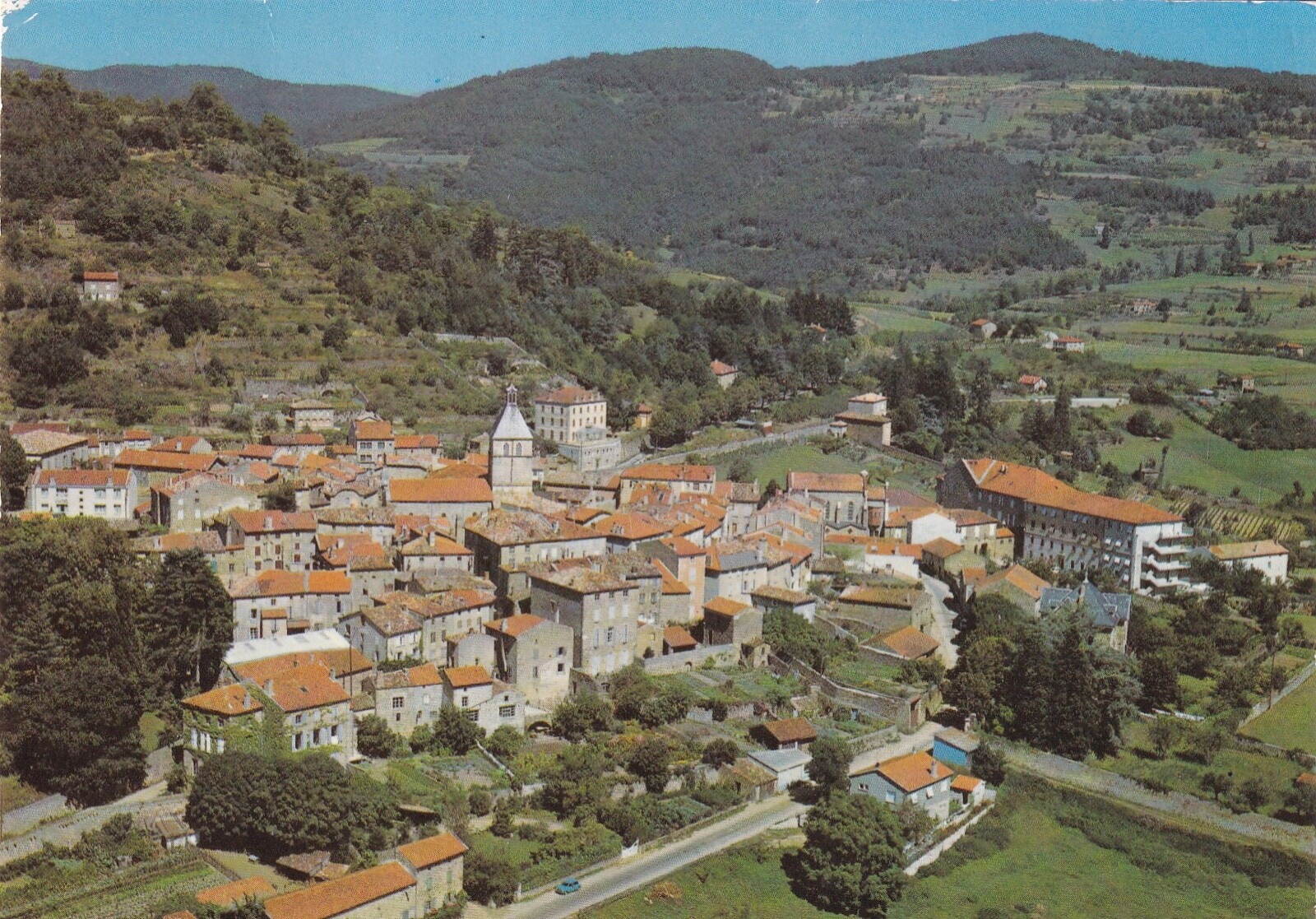
Postcard from Saint-Félicien
Midway today there’s the Col Robert Marchand, a mountain pass named in tribute to Robert Marchand who among many things, set an hour record at the age of 102. He was a racer from the start, as a boy he had to pretend he was older in order to be able to start his first race.
As an adult he took up gymnastics and became French champion in one discipline. A firefighter, time spent in Venezuela and the Caribbean planting sugar cane, a lumberjack in Canada, he led a colourful life. But it was in retirement that he became famous when he took up cycling again at the age of 67 and started doing various long distance cyclosportif events.
One of these was the Ardèchoise where he made his debut at the age of 88 and he became a sort of mascot of the event. Such that he got to enjoy a mountain pass being named after him in 2011. But the moment was spoiled when riding to the commemoration as a truck clipped the Ardèchoise’s co-founder Gérard Mistler, who swerved and took out Marchand. The 99 year old fell hard needing 17 stitches. He resumed cycling but after the crash decided to limit himself to 100km a day.
At the age of 100 and then 102 he set hour records on the track, reaching 26.925 in 2014. This was a side-project, born out of a challenge to see how far he could ride on a static bike in his home on his 100th birthday. He kept on riding for more years and considered a fresh attempt at hour record at the age of 107 but this was not an official attempt, in part because the UCI did not want to be responsible for an event with a 107 year old and any health issues… but he still lapped the velodrome and in front of big audience. He died in May 2021 at the age of 109. Gérard Mistler put his longevity down to “physical upkeep, mental upkeep and optimism“.

The Col Robert Marchand climbed today was easy to rename. It is not a new road, instead it had long been Col du Marchand, literally “Merchant’s Past”, suggesting a long-established trade route to and from Saint-Félicien. It doesn’t show easily in the photo above but squint and you can see the old Col du Marchand sign on the left and on the right, set in fresh concrete, is the Col Robert Marchand sign. It’s a fitting tribute – especially as he was born in 1911 and the pass sits at 911m – but also opens up the possibility of renaming other mountain passes. But it’ll be a while before we get a story as remarkable as Robert Marchand.
Great write up, as always, love the post card. Fingers crossed for Bling to have a win today 🤞
It did seem as if Decathlon etc made a bit of a mess of the finish. I suspect they thought handing the leader’s jersey to a non threat was a good idea so didnt really chase. This then left them open to a small ambush, giving Oscar Onley & Kevin Vauquelin 12 seconds with a team time trail to come is not ideal. In all probability this will be irrelevant given the last three stages but this race is often won by a handful of seconds, never good to give rivals time.
I cant see any of the GC teams putting in too much effort today, its warm and with the TTT tomorrow, if an unthreatening break goes dont see EF getting much help to chase
Marchand for the win
Robert Marchsnd has made me feel a bit inadequate!
He’s definitely unique. But just keep on riding. Use it or lose it.
As a sidenote, The Dauphiné stage was quite dull but the Women Giro one remembered everybody who might be bothered by some boring event here and there during the men’s calendar that women cycling is more visible than ever (though not always enough – live TV not yet on for the first key move of the day) and often much worthier your watching time.
All the Giro stages with some mountain in were quite good, but st. 5 and 9 were outright exceptional, but the uphill ITT on st. 4 was also impressive (if you like the genre) and the Finestre on st. 8, despite the landslide and dangling ice issue, was still Finestre, a great climb with athletes battling on their very limits.
Marginally, a pity that the weight “polemica” on Wiebes bike had her out which took much interest away from sprint stages. To me, besides the debatable aspects, an example of the negative, aggressive attitude by some superteams. Now trying to bring it to courts external to the sport, which is far from a fair attitude, at least on the basis of the information shared by the team itself – but very interesting as a sign of times.
P.S. And also very interesting to see how cycling media tend to align fully with the team’s narrative, not even asking them the appropriate questions.
The cycling teams provide more comment and reaction whereas the UCI just puts out a jury bulletin. But it’s notable how good the likes of Specialized and SRAM are steering things.
See Evenepoel’s bike on display at the weekend, cyclingnews was quick to publicise images of it and even suggest Evenepoel could be racing in France. But it took the Belgian media to report that he was not actually racing; you’d hope a news site would know this first and publicise a new model of bike second. Or see SRAM suing the UCI to prevent a trial safety initiative over gear size etc. Everyone says they want safety but here comes a test and the response is to sue rather than find a way through.
To me, the most shocking example is still the GPS trial catfight.
However, as you say, the team obviously provides only the bits of information more strategic for their interests (or, in this case, the brands’, which they act as a proxy of). But it would be up to a decent press to ask the following questions, forcing the team to make things clearer – or to explicitly refuse to. Which duly… doesn’t happen, as they’re all on the same payroll (metaphorically so?).
The more critical question here is for a measurement that bear such consequences, how come the UCI came up with such an amateur hour process.
If design the UCI bike weighing procedure is a question at an university engineering department admission interview, and the student came up with UCI’s answer, the student would be shown the door quicker than any commissioner can load a bike onto a weighting rig. Basically it shows that the person came up with procedures has no basic understanding of the matter. Worse, it shows that neither does him or her care about actual accuracy of the measurement.
Also, to those who say that a rule is a rule, and should be applied black and white whether it is fair or not, I have news for you. According to escape collective, UCI was forced to update its measuring rig around 2021~2022. A slight unevenness of surface below it and minor movement of the old rig would tilt the weight measurement significantly. Many bikes that pass one measurement would fail immediately if you put it back on again.
The fact that UCI had been forced to update its rig meant there had been disputes with regard to the weight measurement. The fact that we haven’t heard of any disqualification meant in the past, when there is a dispute about the accuracy of the measurement, UCI hadn’t insisting on rider disqualification. In other words, the said rule hadn’t been consistently applied.
The 20g difference is possibly the /smallest/ difference from the limit, in the UCI’s tests, depending on how you interpret statements from team leaders. Jannsen, according to NOS:
“the first [UCI weighing] was 70 gramme lighter than permitted”.
And there was, from same source, 50g between the 2 weighings, so the bike came to 6.73 and 6.78 kg on the UCI scales. Jannsen also said:
“our own measurements after the finish were above 6.83”.
The scale used has an accuracy of 20g and linearity of 40g according to vendor. So if it measures 6.73 to 6.78 kg, it’s very possible the true weight lies well below 6.78.
It is also quite possible that the miscalibrated scale is the team’s, not the UCIs. One would hope the governing body is the one with the rigorous standards around its scales. Perhaps we shall find out, if this is litigated.
I guess that if they’re going to litigate, they’ll hope for a Froomey-style solution, like make a fuss over improbabilities and push for a political “solution” in the while, counting on the UCI’s unwillingness or sheer impossibility to face high & rising costs alone.
Specialized (which will probably pay) has quite much more money to spend than the UCI itself, at the end of the day.
The UCI tends to be open to some negotiation, be it only because its limited power in present days. But now, as SRAM has declared explicitly, some private companies want to write the rules themselves, full stop.
If the weighting come at 6.73kg with a scale accurate to 0.02kg, the actual weight is anywhere between 6.71 to 6.75. When it came in at 6.78, the actual weight is anywhere between 6.76 to 6.80kg. And when two weighing come in over 50g apart, 10g over the 40g variation suggested by the accuracy of the scale, something else is amiss in the weighing process. This something else is affecting the outcome in an unpredictable manner. It could underweight the bikes by any random amount (10, 20, 100g? Who knows), it could also overweight the bikes. But we DON’T KNOW how exactly, in which direction, by how much.
The actual weight of this individual bike does not matter at this point. What matters is that the UCI failed to address many of the basic issues a weighing would face. In doing so, they made it impossible to consistently apply this rule. And as evidences suggest, it hasn’t been applied consistently historically. The relevance of the 6.8kg rule notwithstanding, I hope the current controversy could at least bring the UCI to update its weighing process and bring it up to the basic scientific standard.
Below is a summary of the issues the regulations fail to address:
* It is not clear from either the UCI regulations or the technical documents whether there is an official scale that must be used. In theory, different organisers could choose different scales. Even scales of the same model can produce slightly different readings, and differences can be even greater between models and manufacturers. Ideally, there should be a reference weight (say a 6.8kg weight) the scale on the ground can be calibrated towards.
* There is no guidance on how to deal with measurement uncertainty. Every measuring device has a margin of error. The scale reportedly used in this case, a Kern CH 15K20, has a stated reproducibility of 0.02 kg (20 grams). In practical terms, if a bike is measured at 6.78 kg, its true weight could realistically be anywhere between 6.76 kg and 6.80 kg. Yet the regulations do not explain how this uncertainty should be taken into account. Related, there’s no specification on how many digits should the measurement be accurate to or how you round towards that. The rule says minimum weight is 6.8kg. One could infer that it should be accurate to 0.1kg. But without a specified rounding method, one could infer that it is acceptable to round 6.75kg up to 6.8kg (the emphasis is on “not specified” and officials on the ground could pick whichever way they want).
* The rules are also silent on how scales should be calibrated, how they should be set up before use, or even how the weighing process itself should be conducted. According to CyclingNews, even slight movement of a bike suspended from a scale can cause large fluctuations in the reading. A hanging bike naturally swings like a pendulum. How long should officials wait before taking a reading? What level of movement is acceptable? At what point can the bike be considered stable enough to measure accurately? The regulations provide no answers.
* Environmental factors are another concern. Modern racing bikes are extremely light, meaning even a small gust of wind can affect the reading. Yet there are no procedures covering how weighing should be conducted in windy conditions or how such interference should be prevented.
According to reports from the team (which, admittedly, is only one side of the story), there was significant wind inside the weighing tent and the displayed weight kept changing. This was apparently the reason the UCI officials decided to weigh the bike twice. The two measurements reportedly differed by more than 50 grams.
This raises another important question: what should happen when repeated measurements produce different results? The regulations do not say. The decision to disregard the first measurement, accept the second, and refuse a third was apparently made on the spot by race officials rather than being based on any published procedure.
10 out of 10 for the scenery (Stage 1). It looked like a perfect location fir the world rock climbing championships.
Grenoble makes a great base for cycling with a lot of rides in different directions, the Vercors one day, the Chartreuse the next… but pick the right place, it is both a scenic city in the Alps, a student town, and a narcotics hub with a crime problem. It’s relative of course but just pick where you stay, a place to stay – a studio apartment with mountain views – might be a bargain but the saving could go if your bikes get lifted from the car… but the same advice applies to many places.
@inrng
As you’re normally following closely the financial aspects of the sport, I guess you’re aware of yesterday’s official news of Cairo splitting RCS Sport from the rest of the media group, as it was being talked since 2024, really, and also openly changing what once was the race organisation division into a cluster of what’s now mainly a branding/marketing/ads company (before they were two separate divisions within RCS media). Nothing new, as when Acquarone was named backed in 2012 it was a move in that direction already, but then things went back a bit until Cairo came in.
Now many in the financial market are expecting Cairo to try and sell the new company, which is probably why several strategies of the last few years were aimed at maximising “money figures”. If things go that way, much might change in cycling… depending on who buys (if anyone is interested, of course, Cairo’s also been long trying to sell his football club, Torino, with no success at all for now).
More “Monday Shorts”:
– RAI didn’t broadcast Paris-Nice or Dauphiné (TAURA or whatever) this year.
– Fans complaining were told by insiders in RAI that ASO is now offering different packages which don’t necessarily include all their races, and many public broadcasters rapidly discarded the “less interesting” races. This doesn’t look good at all, to me.
Last Monday Short:
– TV figures in Italy for the Giro Women.
Well below the men’s but still extremely good as a TV product for Rai 2. On Saturday they were the best show in terms of share (7,3%) and close to 700K they were the 2nd most seen show for the channel in absolute terms, as the prime time movie reached 800K (but just a 5% share). They were on par with the evening news (which, again, they even beat in terms of share). Around the same time, the channel hits some 300K with a sport magazine ded to football or 200K with a TV series.
A pity that the great show on Sunday was only enjoyed by some 500K as it had to compete with the Italian Cobolli playing the Roland Garros finale, also as a free broadcast on national channels.
During working days figures often fluctuated around the 500K mark, the uphill ITT being the most seen shown at that time of the day on all TV, barring the two leader channels (which have an established advantage and normally sit at 1.5-1.8M whatever they broadcast).
As a term of comparison, last year’s excellent Dauphiné sat around the 300K mark on the same Raidue channel.
I was half watching yesterday’s stage live while doing other things and was a little puzzled after seeing the GC group cut the gap a fair bit on Baudin, only for it to go out again.
St Felicien is a soft , bloom-rinded cheese which is best eaten between April and September. It is very, very creamy, quite mild and nutty. It’s made from cows’ milk (and extra cream) now but was originally a goat cheese.
The actual saint for whom the village is named was a Roman martyr (eighty when killed) some of whose relics were transported there. His feast day is tomorrow, June 9th.
Often sold in its own terracotta pot in order to stop the liquefied cheese dripping away.
This race is being raced like a mini grand tour, with the big favorites keeping their matches dry for the first couple of stages. Everyone is obviously looking at tomorrow’s TTT as the real start of racing. Can’t wait to see how it shakes out, should set up a lot more action for GC going forward.