
Alps or Pyrenees? The two mountain ranges are often juxtaposed by the Tour de France. Do you prefer one over the other?
If you do, chances are it’s the Pyrenees. Many cyclists cite the wilder feel, the older buildings, the roads that feel more irregular to climb, while the Alps have big ski resorts, crowded valleys and busy roads. It’s true in the sense yes the Alps have have big ski resorts, crowded valleys and busy roads but so do the Pyrenees. I’ll see your Maurienne ski resorts and raise you with Andorra.
Just like the Pyrenees, the Alps have plenty of wilder corners with roads that weren’t built by bulldozers to pave access to a ski resort in the 1970s too. Only the Tour is often a poor prism to refract this back to TV audiences and this televisual psychogeography can distort the views.
This weekend’s stage to Alpe d’Huez is interesting as the main climb has As-Seen-On-TV celebrity but the Col de Sarenne gets some limelight, in part to persuade visiting cyclists to stay and try more roads in the area. If the Sarenne is rewarding for the scenery and solitude it still begins on the busy Col du Lautaret main road by the industrial Chambon dam.
There are plenty of quiet valleys in the Alps that offer tourists plenty of rural charm, cyclists get empty, irregular climbs… and residents struggle to access public services just like the Pyrenean clichés too. But these parts don’t host the race often, if at all. As a result they don’t seem to exist among the mythology of cycling locations.
Today’s stage passes many of these quieter corners. It rides into the Vercors, a spectacular part of the Alps, or pre-Alps if you’re a stickler for geology but only via a main road up and then back down rather than any of the spectacular cliff-hugging roads but it could still look good on TV. The Vercors has at least featured in the Tour but rarely. It is a quiet place, no mass tourism ski resorts and plenty of roads that started out as smuggling trails or forestry paths and then gradually got tarmacked. Once the race quits the Vercors it’ll take the training roads of Paul Magnier.
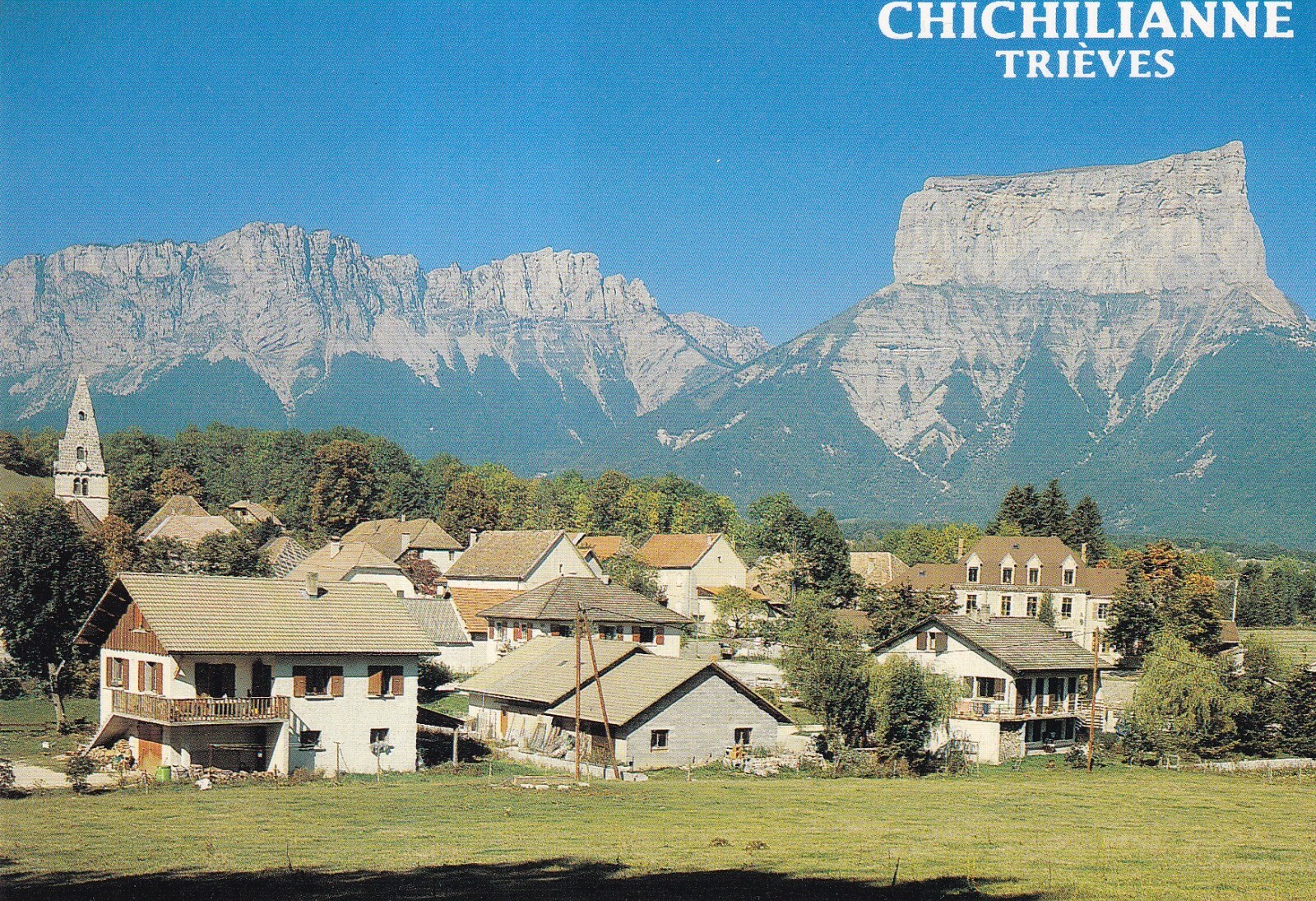
Nearby is another corner of the Alps called the Trièves which offers wide open spaces in the mountains and little in the way of mass tourism nor industry although it does now have a relatively new autoroute. Motorists have to pay but they get their money’s worth with the views along the way.
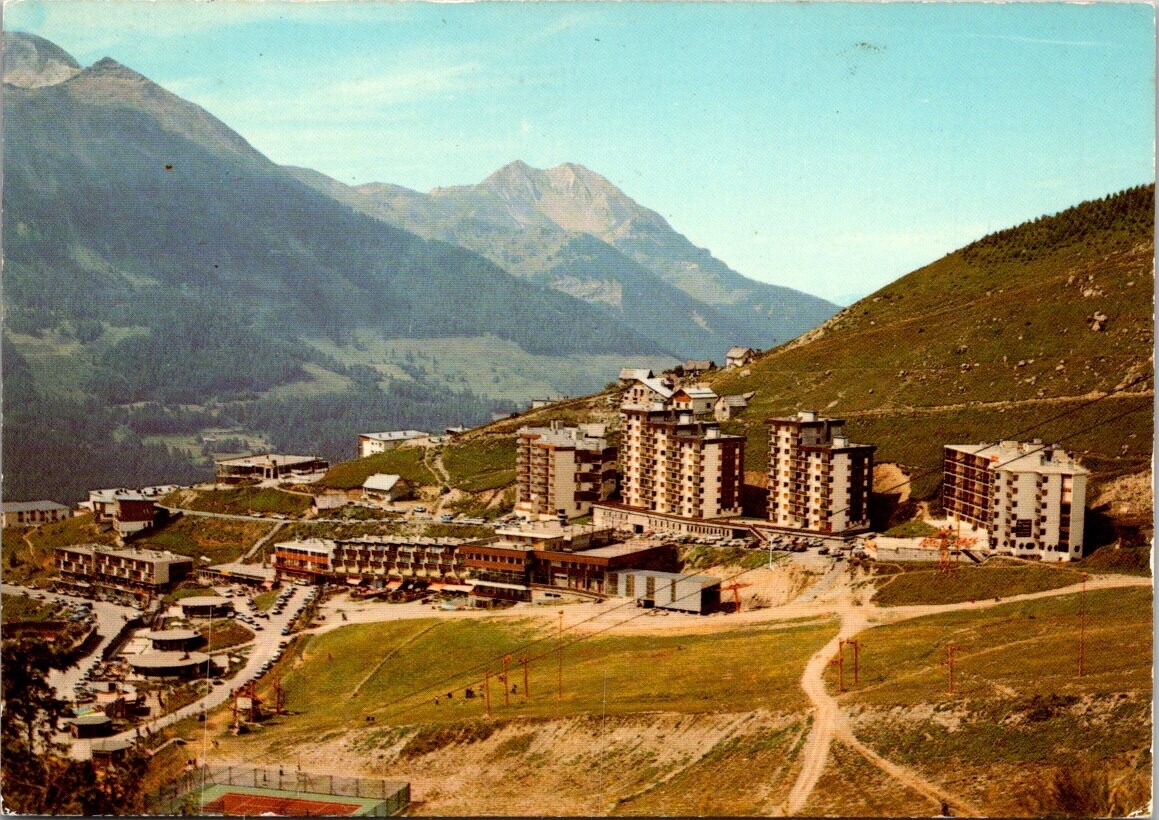
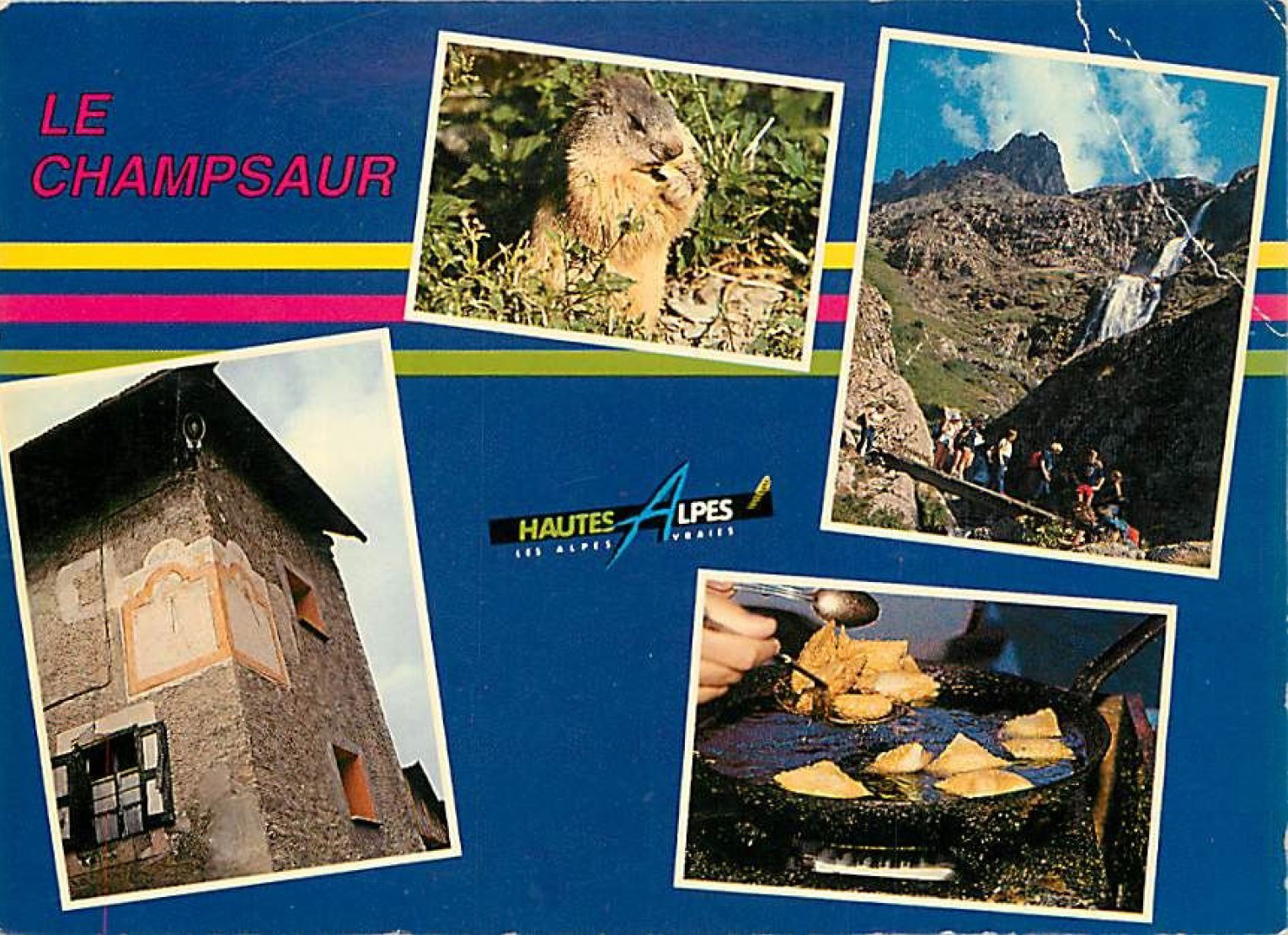
Later in the stage is the Champsaur, another corner of the Alps often passed by in the Tour. But illustrative as the race finishes in Orcières-Merlette, the name of the ski resort. Merlette, with its apartment tower blocks, is the aberration. But because the Tour visits it’s easy to remember this rather than all the side roads and smaller passes and nearby wilderness not seen on TV.
Indeed rather than juxtapose, if the Tour doesn’t show off all the Alps, it doesn’t do the Pyrenees justice either. It sticks to familiar haunts like the Tourmalet, Aspin and Soulor passes. Gavarnie was a novelty this year it’s just a turning away at the foot of the Tourmalet. So a similar selection bias is evident as the wilder parts of the Pyrenees don’t and even can’t host the race very often. This year’s stage to Les Angles touched on a relatively unexplored part of the eastern Pyrenees for the Tour but the race did not stay to range more. Similarly western parts in the Basque Country are even more unknown to the Tour despite having some of the hardest climbs in France, something that ought to be a draw for the organisers. But these areas are relatively remote.
Logistics play a big part. Alpe d’Huez can host 23 teams with their 28 bed allocation and supply parking to the fleet of vehicles every team brings. So can the city of Pau but it means the Tour struggles to reach smaller places.
One nerdy point on how Tour stages are hosted these days is that increasingly it’s a regional effort. Rather than one host town taking on all the costs, departments and regions are sharing the burden. This means a small and relatively poor town could get to host the race if there’s something to gain for the wider region. So the Col de Méhatché, aka Artazamundi, could feature one day if the Pyrenees-Atlantiques council wanted to promote what many forums say is hardest tarmacked road pass in France.
And yes there’s more beyond France for the Alps and Pyrenees alike but that’s beyond a postcard from the Tour de France. But it does speak to the relative size of these mountain ranges, the Alps by virtue of being bigger in France alone offer a lot that goes unseen.
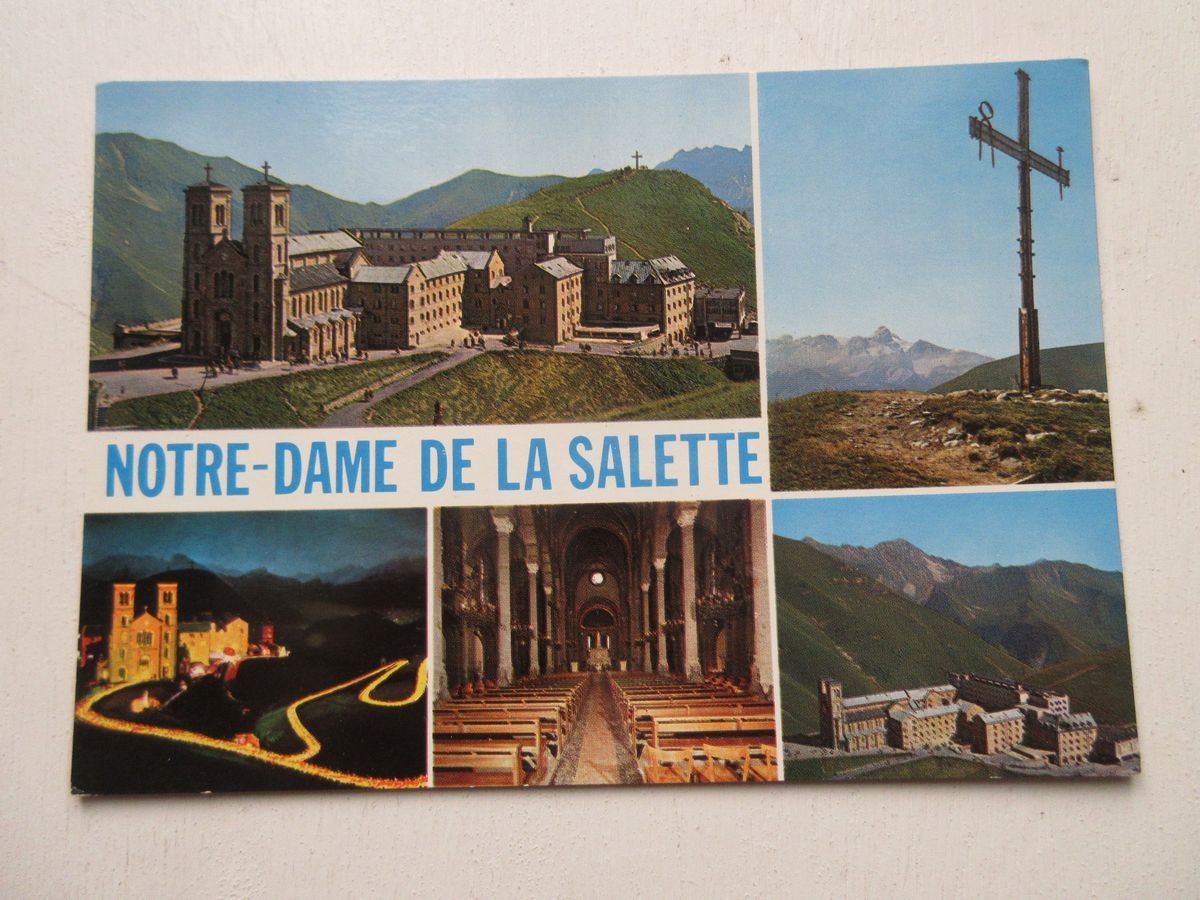
Today’s intermediate sprint in Corps comes a relatively flat part of the stage. But turn left and there’s the Col de l’Homme and beyond to the Notre Dame de la Salette sanctuary, perhaps too sacred for the profanity of sports event and never seen on TV at the Tour… but rewarding for travellers.
Sometimes one feels that it’s better if people simply don’t get to know. Sacrifice again and again the same sacrifice zones until a different model can really be developed and put in place to then expand, then and only then, the influence area of tourism. The apparently wise idea of broadening the tourism area to share both burdens and benefits hasn’t yet worked with any decent result in the places I know.
Wow, Notre-Dame de la Salette might be sacred but it looks like that gargantuan architecture is a necessary feature for Alpine buildings, or what?
It’s like Oropa… a comparison only made because the Giro has visited and put the climb to mind. But a wilder road with big open views, the building at the end is almost as much the aberration as the appartment towers above Orcières.
Maybe I’m being Italophile here, but Oropa to me, although quite colossal (and maybe even more so than this case), is a better result as an architecture and in its (still invasive) relation to the landscape.
Covadonga also comes to mind as an example, sort of in-between the above.
Of course as far as ski-station are concerned, cycling’s historical finishes of Aprica and Foppolo can sport as much ugliness as anywhere else in France.
Better results can be found in the Dolomites, of course, but also Livigno or the Bormio area could keep more of a decent low profile.
That said, great postcard so full of acute points – we’re getting used to these not-so-little treats, but worth noting and thanking all the same.
Speaking of “big sacred architecture on mountains”, one I quite like is the Sacro Monte di Varallo, I think it was shown on TV as the Giro passed by five or six years ago, but not a common route.
Unlike Oropa or Covadonga, the cycling connection is feeble but Testori, who also wrote great pages on cycling, loved it and definitely put it in the collective literary psychogeography ^___^
The cycling book:
https://europeanbooktrailers.eu/trailer/il-dio-di-roserio/
I think I named it in the past, but now I fonud this book trailer 😛
I suppose that Alpe d’Huez does not mind becoming the Tour’s very own alpine sanctuary – especially, it seems to me, in recent years in which it is almost becoming fetishized as THE climb and destination. Let them become the tourist destination and leave the other bits of the French Alps you mention remain undiscovered.
The almost flat-topped mountain on the right of the Trieves postcard looks amazing. I imagine there’s no road up to the top of it however. (Before I started watching cycling I used to assume that mountain top finishes meant they’d literally finish on top of a mountain & was a bit disappointed to discover that most finishes are at the top of a pass rather than on an actual peak!)
It’s Mont Aiguille (“needle mountain”) and while it looks more like table mountain from the postcard, viewed from other angles it looks more like the name suggests.
That mountain has an interesting history itself. Definitely no roads up, and it has rarely been climbed, but if I remember correctly the first expiditioners found a herd of goats happily grazing on the plateau.
Absolutly. Its often cited in (french) history books as the first mountain to be climbed for the sole purpose of getting to the top, ie the first “modern” exemple of alpinism. Although it was a prestige military operation, and many many ladders were involved. Can’t remember the date, mid 18th century maybe ? I suppose other countries had similar ideas at the same period, so the label “first” may well be a bit franco centric. Lets just say its the first exemple of French alpinism 🙂
@Dawnstar, yes, as a (very mediocre) alpinist myself, this habitude off naming mountain top a low point between actual moutains has always bothered me too ! The Galibier is a prime example : the col, the highest in the tour this year is only at 2650 m or something, while the actual Grand Galibier mountain sits a 3330. I urge everyone who takes pleasure in suffering uphill to target its summit (a very acccessible hike, not technical at all) for the best possible view over the Meije (the most beutiful mountain in the world, as every local knows) and the Ecrin Massif. The landscape heli shots tomorrow will be the highlight of the stage.
This is chucB, btw. bad clicking.
Just checked, 1st ascent of Mont Aiguille, june 28 1492. Hell, this is much older than I thought…
Petrarca going up the Ventoux on April 26, 1336, with his brother and two servants (sherpas…) just for the sake of it, as reported in a famous and beautiful letter, could claim the title. Only, as the events recounted also have a simbolic, spiritual meaning (as everything in the Middle Age), some consider that they didn’t actually get to the top. Petrarca probably adapted some details and used a route which probably doesn’t exist anymore, but IMHO he did it. It’s also considered the first time we have a description of a landscape being watched for mere esthetical pleasure.
Yes, but at the risk of shocking most of the cyclists reading this blog, Ventoux is not a proper mountain, more like a glorified hill 🙂
That said, the normal way up mont Aiguille is rated 3C, which is really, really easy. In alplinist language normal means easiest and therefore in general (but not always) used in the firts historical ascent. 3C means if you can walk, you can climb it. Kudos nonetheless to captain De Ville for doing it with 1492 safety equipment.
Strangely Aiguille was quite hyped during the French renaissance, a lot more than any of the much taller and sexier peaks of the Alps. Some pictured a hidden paradise at the top, shielded from the all the unplesantness of valley life. In the list of absurd reasons that push humans to risk there physical integrity to climb mountains, this hope of touching the sacred for a few brief moments still probably features quite high for many of us.
I can guess some technical logic behind not including Ventoux as getting up there it’s not “alpinism”, more “hiking” of sort, but I would argue against such being a valid point. What makes the difference is the concept of going up what visually and culturally is perceived as “a mountain” (which Mont Ventoux pretty much is) for its own sake, i.e., for a set of reasons that don’t belong to the sphere of “useful” in a military, tactical or economic sense (and so on).
The above can be clearly acknowledged in Petrarca’s text, which was also thought from the very beginning to be published (despite its format of “private letter”), and had a huge impact across all European cultures, implying that there’s a high chance many people were subsequently influenced by his vision – directly or not.
Hard to know but through the course of prehistory and history technically harder climbs from different POVs – harder than Mt. Aiguille, I mean – were probably tackled by members of Hannibal’s army during explorations in order to cross the Alps, by Oetzi to run away from his killer, by miners, by honey harvesters and so on. Only, there were practical ends for that all.
Absolutly. Its often cited in (french) history books as the first mountain to be climbed for the sole purpose of getting to the top, ie the first “modern” exemple of alpinism. Although it was a prestige military operation, and many many ladders were involved. Can’t remember the date, mid 18th century maybe ? I suppose other countries had similar ideas at the same period, so the label “first” may well be a bit franco centric. Lets just say its the first exemple of French alpinism 🙂
@Dawnstar, yes, as a (very mediocre) alpinist myself, this habitude off naming mountain top a low point between actual moutains has always bothered me too ! The Galibier is a prime example : the col, the highest in the tour this year is only at 2650 m or something, while the actual Grand Galibier mountain sits a 3330. I urge everyone who takes pleasure in suffering uphill to target its summit (a very acccessible hike, not technical at all) for the best possible view over the Meije (the most beutiful mountain in the world, as every local knows) and the Ecrin Massif. The landscape heli shots tomorrow will be the highlight of the stage.
I read this postcard, put on my TdF casquette, and walked the dogs. A neighbor saw it and asked, “Are you a Tadej fan?” “Yeah, how could I not be?” “Bah! He makes the race boring.” I told him I disagreed, that to me that would be like finding Simone Biles or Shohei Ohtani boring, and that you have a choice: you can hate, or you can enjoy the marvel, and that there’s so much to watch besides (witness yesterday’s thrill ride). I stand by this; but on consideration what I’d like to have told him is that the Tour is bigger than Tadej the way the Pyrenees are bigger than the Tourmalet, the way the Alps are deeper, wilder, quieter, subtler, more varied, and more lasting than the sum of its revisited climbs. Thank you, INRNG, for capturing this sense of scale for me.
@Fausto. Not supporting Pog is not the same as hating him and it frustrates me to no end when Pog supporters throw that out there. I can and do admire him, he is a phenomenal rider, i just choose not to support because of the team he rides for. Hate him I do not.
Andrew, I think we’re on the same page, Team UAE appeals to me even less than Tadej’s crypto investments; but as someone may’ve said back in the Molteni days, it’s how the sausage gets made. I have talked with people who hate-hate Tadej. I’m not saying you, but they’re out there.
Coincidentally, I minored in televisual psychogeography in my university days…
When it comes to “being around” to ride the roads and follow the race, I tend to prefer whichever region comes first in the Tour. There´s already that anticipation and excitation in the air but not the frenzy that comes later in the race. It´s a more relaxed, less crowded atmosphere overall in the earlier mountains, and the race is still open and spontaneous. That said, the first time I visited France during the TdF to ride a bike we stayed in the Pyrenees and it was very special so the region holds a special place in my heart.
I’m with Ale Torres the first place I rode at the tdf was in the pyrenees. It was 2003
and back then things were much more relaxed and you could just walk right up to the riders and talk to them even though two years after 2001.
The place then was much less commercialized than the alps and everything a lot more rugged.
Another note of thanks, it’s posts like this that so expand my enjoyment and knowledge combining sport, tourism, history, geography etc etc. I’ve been a very long term reader of the blog and it is incredible how much breadth and depth you add. Every day is a school day as they say. Also very much appreciate the learned comments from the contributors that add so much. Great stuff.
Love a post card, thanks