UCI financial accounts published

UCI logo

Accounts are boring but often the money is not. I’ve done the hard work for you and here are some “highlights” of the UCI’s annual financial report.

First note it is from the year ending December 2010, some time ago but the wheels seem to turn slowly in Aigle and despite being approved by auditors in May, it took until September to agree to publish the accounts. Numbers are Swiss Francs (CHF) and today’s exchange rate is at the foot of this piece.

Read more

Grand Colombier, big ideas

Grand Colombier

The 2012 Tour de France hasn’t been announced but the blogosphere has a good take on the route already. Whilst rumours circulate it seems several reports are confirming that the first mountain stage will feature the Grand Colombier climb in the Alps. It sits above the Lac du Bourget near Aix Les Bains and regardless of the route to the top this a hard climb with double-digit gradients and ramps at 20%  at times. Many riders will know it from the Tour de l’Ain race held every August.

Read more

Avoiding the late season scramble

UCI golden age

The UCI might declare the sport to be in a “golden age” but I see otherwise. Sponsors are staying away from the sport and teams are increasingly reliant on wealthy benefactors for funding. There’s nothing wrong with the sugar-daddy approach but it substitutes corporate sponsorship; many companies might find their audience demographic of cycling is ideal for them but right now they are watching instead of investing.

The shortage of sponsors means there’s still plenty of uncertainty for the 2012 season. Things might fall into place in time for the Tour Down Under but don’t forget a team costs millions to run. For me it seems quite off-putting that several squads don’t know for sure what they’ll be doing next year. If you want to spend millions on a team you need transparency and long term visibility.

Read more

Óscar Sevilla’s trauma

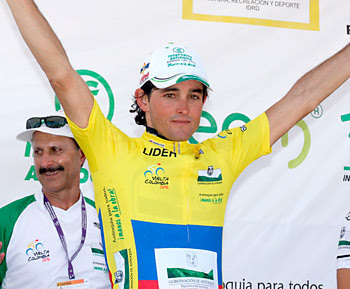
Sevilla

At the start of his pro career many found Óscar Sevilla so fresh-faced they wondered if he was a junior. Now just days from his 35th birthday, his image is less angelic and it’s not just the passage of time. Yesterday he was given a six month ban by the Royal Spanish Cycling Federation (RFEC) for a doping offence.

Read more

Shorts

A few small pieces from the weekend that are worth mentioning but to short to warrant a full piece.

Vinokourov

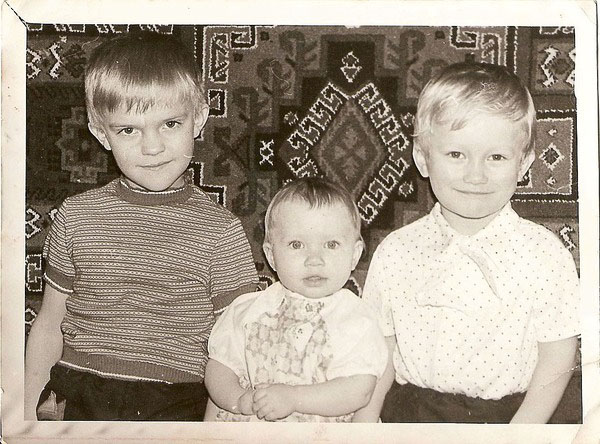
Does the angelic face on the right look familiar?

Read more

Ag2r’s Iranian rescue plan

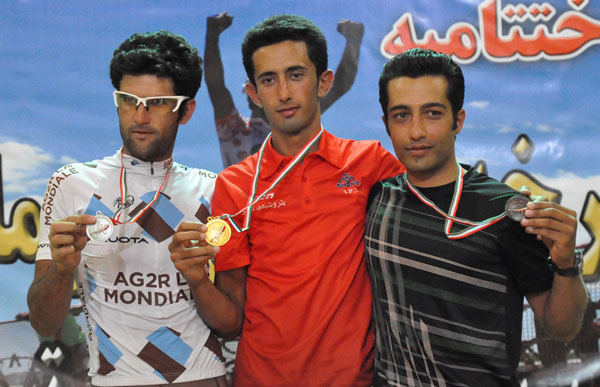
For a brief moment in the Worlds on Sunday Iranian rider Hossein Askari jumped away from the bunch. This might be the first time you’ve seen an Iranian cyclist competing at the top level. But the Iranians have a strong team and the Tabriz Petrochemical Cycling Team is second only to HTC-Highroad in the number of wins this year.

Read more

The moment Cavendish won the Worlds

Project Rainbow Jersey

Mark Cavendish won the World Cycling Championships in Copenhagen by crossing the finish line first. But the route to victory was more than the 14 laps and 266km around the northern suburb of Rudersdal.

Read more

The forecast for Sunday

Peter Sagan

It’s hard to get the weather forecast right sometimes so predicting the results a 266km race is a lot harder. Nevertheless, for the fun of it here are some thoughts for Sunday’s elite men’s road world championships, starting with some scenario analysis and then a run through of the favourites.

Read more

On image rights

I’m more interested in the Worlds right now but with allegations in the Corriere della Sera involving the notion of undeclared revenues and money being transferred around Europe, here’s quick mention of the subject of image rights.

Read more

The rainbow jersey

Rainbow

Famous as the symbol of the world champion, cycling’s rainbow jersey was first introduced in 1927 when the inaugural world championships were organised in Germany. The winner was Italian Alfredo Binda.

No rainbow
For a start the colours aren’t those of a rainbow. In nature the spectrum of light does not include black in the middle. Instead the colours come from the Olympic rings which are supposed to represent the five continents.

Read more