
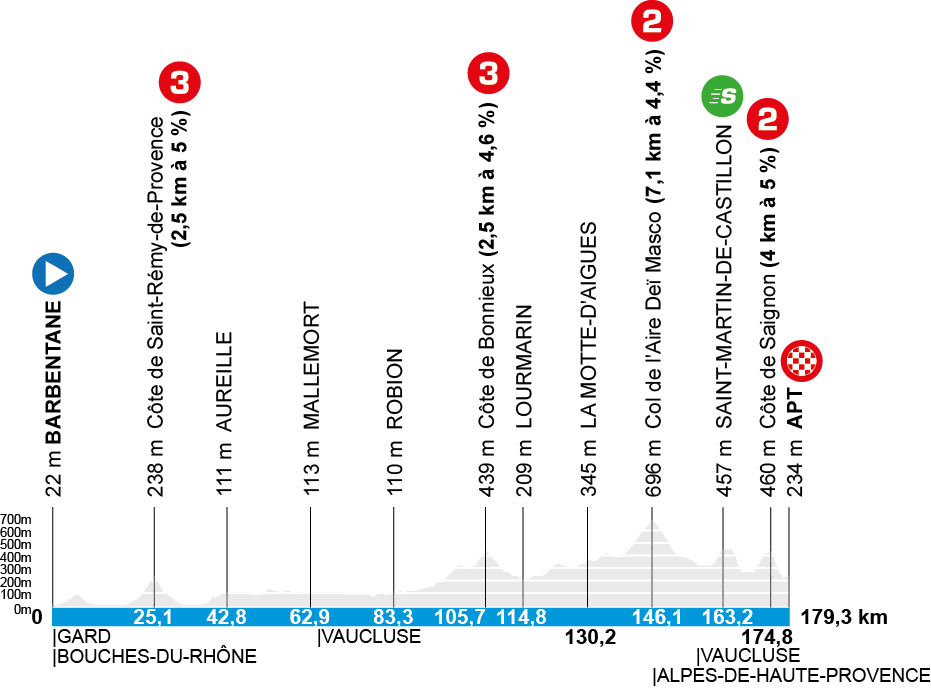
A good day for a breakaway and the most accessible stage of the week.

Stage 5 Review: a fast stage with a solid breakaway but Visma-LAB chased hard and last helper Victor Campenaerts led out Jonas Vingegaard on the hardest climb of the day so the Dane could attack with 21km to go. Nobody could follow him, Lenny Martinez was close but as soon as the climbing was done Martinez and others floundered and the Dane was away for a second stage win and after yesterday’s wardrobe malfunction he looked good in the yellow jersey and now leads the mountains competition and sits in second place on the points competition behind Luke Lamperti. It’s pleasing to see Vingegaard being this audacious but let’s hope the Giro has more suspense.

The “chase” behind was amusing if only because there was little pursuit and instead the riders were taking turns to attack. Kévin Vauquelin was keen to make up for lost time but it showed, he was making a lot of moves and almost paid for this as he struggled to follow others.
The Route: 179km and 2,100m of vertical gain. It’s similar to 2020 when the race came and toured the Luberon mountains before a finish in Apt but a different route altogether. None of the climbs are tricky by themselves.

The Finish: the climb to Saignon with two difficult kilometres. It’s almost the finish line as 20 seconds for a lone rider over the top could be sufficient to win.
The Contenders: the archetypal winner today is a fast-finisher who can handle some climbs and the final climb . Whether they infiltrate the break or use their teams to control the race depends on their squads.
Luke Lamperti (EF) fits the bill here but will be challenged by the climbs. Biniam Girmay (NSN) likewise and while he’s not had a result so far he might find today’s course less chaotic. Dorian Godon (Ineos) and Orluis Aular (Movistar) could be better on the climbs, likewise Max Kanter (XDS-Astana). Bryan Coquard (Cofidis) is a contender but a rare winner.
The Van Dijcke brothers impressed on the stage to Uchon and Tim was the better but there’s not much in it. Andreas Leknessund (Uno-X) finds roads to suit. Victor Campenaerts (Visma-LAB) looks in great form. UAE don’t have many options left but it could be Ivo Oliveira‘s time.
 |
– |
 |
Leknessund, Godon, Aular, Kanter |
 |
Campenaerts, Vacek, Oliveira, Lamperti |
Weather: sunshine and 16°C, with a gentle breeze of 10km/h from the SW.
TV: two hours of live coverage with the finish at 5.00pm CET.
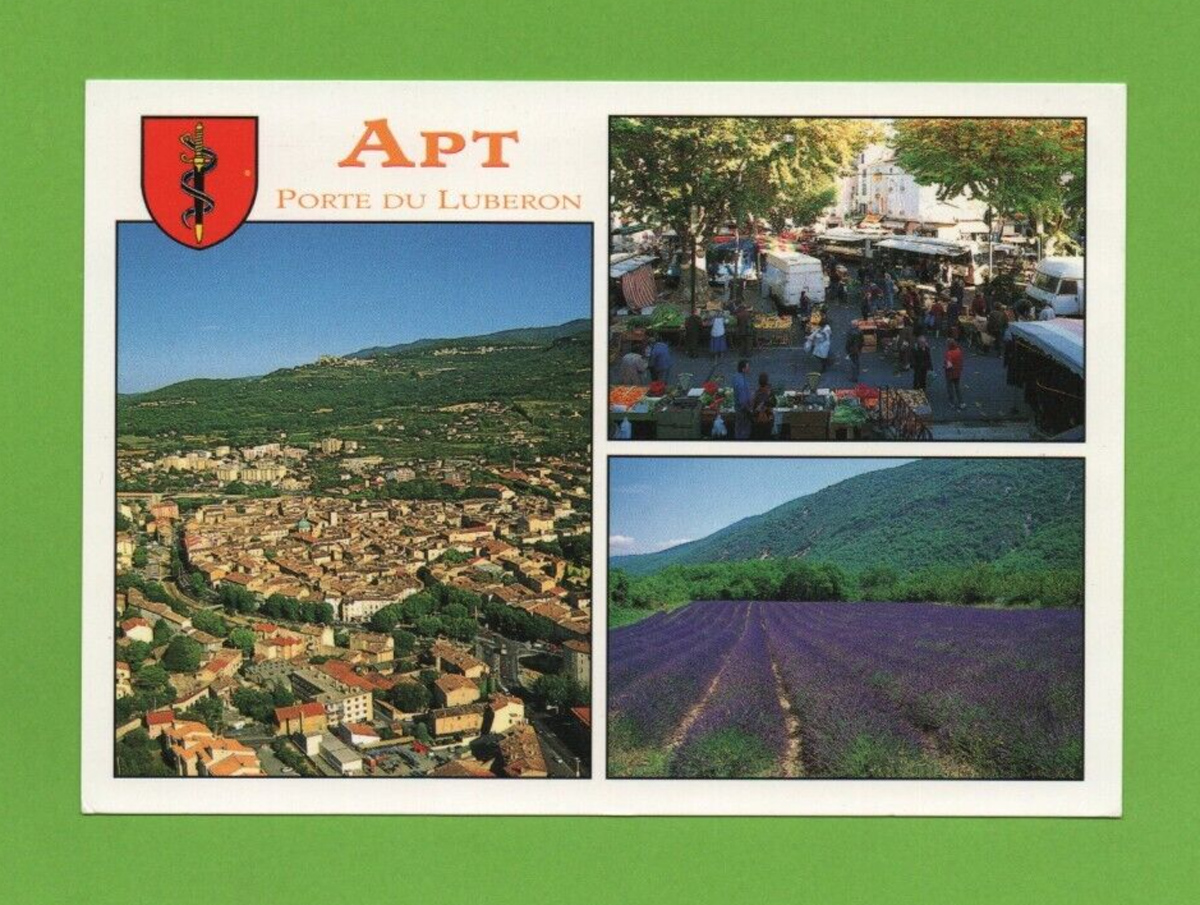
Postcard from Apt
Paris-Nice returns to Apt for the third time, completing the superstitious French phrase of jamais deux sans trois or “never two without three”. That’s fitting for today, Friday 13th. Often associated with bad luck, in France it can go both ways. Lottery operator FDJ gets a boost in sales today. While the probability of a Friday 13th is 1.72 times per year, 2026 has three: last month, today and one in November too.
Superstition has its place in pro cycling. As irrational as it might be, it makes sense in a domain where random events occur. You might crash because you went into a corner too fast; but often it’s because someone swerves, someone else brakes, and there’s a pile-up 40 places down the line. There’s been a lot of work to minimise random events and master the details – once upon a time team manager Antonin Magne would use a pendulum to dowse rider ability, today we have power meters – but it remains a fundamentally risky sport. Many a rider has their pre-race rituals.
The number 13 is often pinned on upside down in a race. In the 2023 Tour de France it didn’t exist with UAE having numbers 11-12 and 14-19. But only the 13 gets this, other unlucky numbers like 17 in Italy or 4 in Japan don’t seem to get the same treatment.
Coincidental or not the last time Paris-Nice came to Apt it was in 2020 and on Friday 13 too. Tiesj Benoot won that day but if there was luck involved it did not show. His team Søren Kragh Andersen had been up road with Romain Bardet when Benoot blasted across in the finale and then rode away for the win. It was the kind of tactical coup Sunweb would deploy in the Tour de France later that year to take three stage wins. The team is branded Picnic-PostNL and need some luck as they’re the only team without a win this season, they’re last among their peers on the UCI rankings by some way and they were the slowest in the team time trial earlier this week. Maybe today?
IR points out the risks in the sport. PCS lists to date in 2026 fifty accidents where riders were unavailable due to their injuries, what in industry would be called lost-time accidents. Many others result in painful injuries tolerated as part of the sport but where riding and racing can continue. That from a pool of maybe 2000 full-time professional riders. What parent would want their son or daughter to take part in such a dangerous activity?
Matthew Richardson had a crash at 0 km/hr during the sprint final at the recent UCI world cup event … it is that kind of sport.
Master descender «il Falco» Savoldelli had his naughtiest crash when standing still waiting for a stage to start. He badly scarred his famous «baby face» (his other nickname).
The UCI is building a big database on injuries and part of its safety drive, think of the need to measure a problem in order to address it. It’d be interesting to know if the sport is more risky or not but they can’t go back and collect much historic data.
Recently retired rider Tom Paquot was saying today’s bikes are so much faster but the flipside of this is that speeds are higher and they’re more twitchy but the bike industry doesn’t want to have this conversation. See how SRAM didn’t welcome the trial gearing restriction in Guangxi that the riders wanted last year but sued the UCI to block it instead etc.
Children getting into cycling tend to be, or should be, well guided with an emphasis on skills and having fun, rather than being dropped into a bunch of 180 riders doing 55km/h around street furniture or racing down an unknown mountain pass. Horse riding is probably more dangerous for kids?
PCS has a graph which suggests that accidents are becoming more frequent, or maybe it’s just that the recent PCS data is more complete.
https://www.procyclingstats.com/statistics/riders/injuries
Traffic calming measures are of great benefit for pedestrians and maybe leisure cyclists too, though not for a peloton at >50km/h fighting for position.
Horse riding tends to take place on well prepared ground with plenty of ‘spring’ so falls are not as damaging as on tarmac. Even landing ( ie falling off) on open ground is much nicer than on a pavement.
Most horses are pretty co operative , and trying not to fall or to unship the rider. Bikes don’t bite or kick you if you misbehave, though.
I hope training accidents are included, then properly tackled in the countries where they’re an issue.
I am not sure if the figures are correct (I just checked that the magnitude «grosso modo» makes sense, indeed) but friends in the sport were commenting in a gallows humor tone that in Italy men and women cyclists have a higher chance to be killed by a car during their first two years after the juniores category than an Ukranian civilian to be killed by Russian bombing during the same amount of time.
Speaking of luck, an unsung advantage of electronic groups is that they may allow you to keep your fingers crossed while shifting.
I’ve been following pro cycling since the Lance era and don’t know if I’m just paying more attention these days or the crash rate has significantly increased.
I suspect there’s an element of me getting older rather than the sport actually getting sketchier, but it seems like there are very few races/stages nowadays when there isn’t at least one serious crash.
What other mainstream sport carries such a high risk of life-changing injuries, or worse, every time you participate?
As I commented above, not only when you partecipate… training is (relatively) high-risk, too, and even less subject to your own risk-taking choices.
@spicelab there are quite a few – and here are just a few examples: Cricket, F1 (although they seem to lead the way on safety)/other motorsport and skiing
Also boxing, rugby and American football too.
Living 10 km from Apt, I rode the last 30 kilometres of the route yesterday. There is an almost childlike pleasure in following the yellow route arrows to a finish line. From Cereste the route drops gently down along the D900 which the race turns off too climb up St Martin de Castillon. It shouldn’t worry them as it is a well surfaced, wide road with a maximum of 7%. Then back to the D900 on a relatively fast descent with a few hairpins. A left hand turn off the D900 takes the riders onto the climb to the hilltop village of Saignon. It is narrower and the surface is cut with old utility trenches. There is a short ramp at the beginning and then another which just touches 10% 500 metres from the village. The descent into Apt is fast on a flowing road. At the bottom the riders will have to negotiate a small roundabout and are then led round the town and back into the centre with some sharp bends up to a finish straight at the top of Apt. As M Ring says the last ramp could be a place for a breakaway and a lone rider will have an advantage coming through Apt. If a bigger group arrive together then it could get interesting! The Vaucluse is a beautiful Department and today the sky is pure blue after the recent rain and happily there is no Mistral. Enjoy the race and the scenery.
Thanks. It’s a nice part of the world and should look good in the sunshine today.
If anyone is planning to visit Mont Ventoux for cycling and possibly with friends or family then places like Gourdes, Rousillon and Apt near today’s finish offer plenty more than Bédoin can (apart from bike rental).
Spent the better part of a week there last October, staying near Viens. Gorgeous riding in the hills albeit a long ride just to get to Mont Ventoux. The climb to Simiane-la-Rotonde (not much of a climb) is worth it to see the perched hill town and the surrounding area. And riding through Les Gorges de la Nesque was great fun.
Very much enjoyed this comment. Thank you! I will be in the area in May and I’m thinking I’ll ride the 2nd half of the stage (from Robion to Apt). This description really whets the appetite!
Dossard 13 pinned upside down is one of the not-so-many Velominati rules that aged well.
The one time I was issued #13 and did not pin it upside down, I crashed out of the race. I have always been superstitious, but from that day onward I was very strict about things like that.
Now that rim brakes have been nearly kicked out from the picture, can we finally at least suggest that disc brakes don’t seem to have improved much riding safety ins road cycling?
Be it because of some «safety feeling paradox», or because of the technical duration and moment of braking, or just that they’re irrelevant for safety, all sort of measurements and sensations fail to detect any improvement since they became the standard in the peloton.
Of course, maybe they’re actually improving things exactly as other factors makes things worse, but what’s sure is that any positive effect is hard to notice.
Besides mere speed, however, I’d stress that modern bikes aren’t as sweet to handle – which is why there’s still a market of top-level bikes (for amateurs and cyclotourists) whose priority is ride quality over rigidity and aero. Moreover, I’d insist on the fact that the peloton in general looks to be made by more – often very young -athletes selected for their physical potential over technical skills.
The above isn’t obviously to deny the role of speeds, road furniture or, may I add, declining asphalt quality in some countries (more recently, in Spain).
Today’s bikes at least have 28 and 30mm tires which helps braking and grip a lot… but are also needed for comfort and adherence. Discs stop better but later braking has its risks too.
But difficult for the sport to go back from this. If you’re a rider you might like a more comfy ride that can cope with some bumps in the road etc… but don’t want to be overtaken on the flat or on a descent by someone who is freewheeling because they’re on an aero bike.
I’ve always questioned whether disc brakes are a better option at all. Better perceived stopping power might actually lead to more risk-taking at higher speeds. I know it’s difficult to ask a high-tech sport to slow down, but it seems like that will be necessary at some point.
Mandate a minimum tire width of 35mm (or more). That might begin to scrub some speed and simultaneously give an extra margin of grip.
You have my vote.
Cyclo-cross has a limitation of 33 mm wide tyres. No limitation exists for other race bikes, weirdly. But the later years have significantly raised the tyre diameter due to multiple reasons.
Back in the day – late ’80-ties – tyres couldn’t get small enough. We were in awe when Michelin presented the BIB 18 mm. That tyre was even smalle than the rim! and we thought ourselves so very very fast running 18 mms at 120 psi. Christ, we could feel any line on the road surface and it was so tiring. But, man were we fast;-)
Often presented a criticism, the fact that the main protagonists of the peloton, the top riders capable of beating each other, are not in the same races is setting up the season nicely (at least for me).
We’ve seen van der Poel dominating the appropriate stages in Tirreno, Vingegaard doing the same in P-N, and of course Pogacar in Strade Bianchi. Not only that, we’ve seen key supporting characters (Del Toro, Seixas) show good form too, and some interesting spin-off plots in development (Vaquelin vs Only at Ineos).
This is where I start looking for those meaningful races where the big riders clash. Those bits of the season we’ll remember. A moment, also, to remember that this perceived weakness of the sport is a strength. One look at the F1 opening weekend probably tells the story of the season, but we can look forward to much more.
Also worth noting that as the final top 10 shows, MvdP especially on Tuesday of course was testing himself on a terrain slightly harder than his own confort zone, which made for some glimpses of great battling, i.e. not just a mere domination; with several other athletes able to prove their quality as the terrain was more suited to them.