
This year’s edition is harder than ever with fewer stages for the sprinters and more climbing. Here’s a preview including the likely finish times in case you need to set your alarm clock.
Prologue – Tuesday 20 January
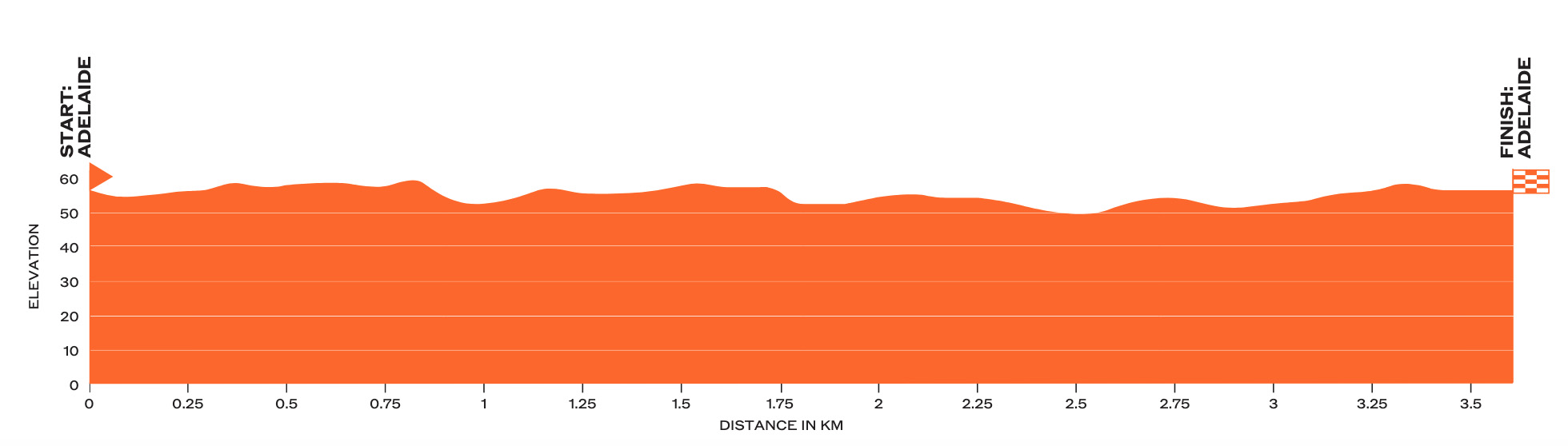
Like in 2023 prologue is on road bikes so that teams don’t have to fly out truckloads of supplies for just 3.6km. Unlike 2023 the course is less Mario Kart and more predictable with longer straights and regular corners. In what’s often a close race for GC on the final day this will put seconds between riders on the opening day.
- Finish time 8.30pm – 11.00am CET – 05.00am EST USA
Stage 1 – Wednesday 21 January
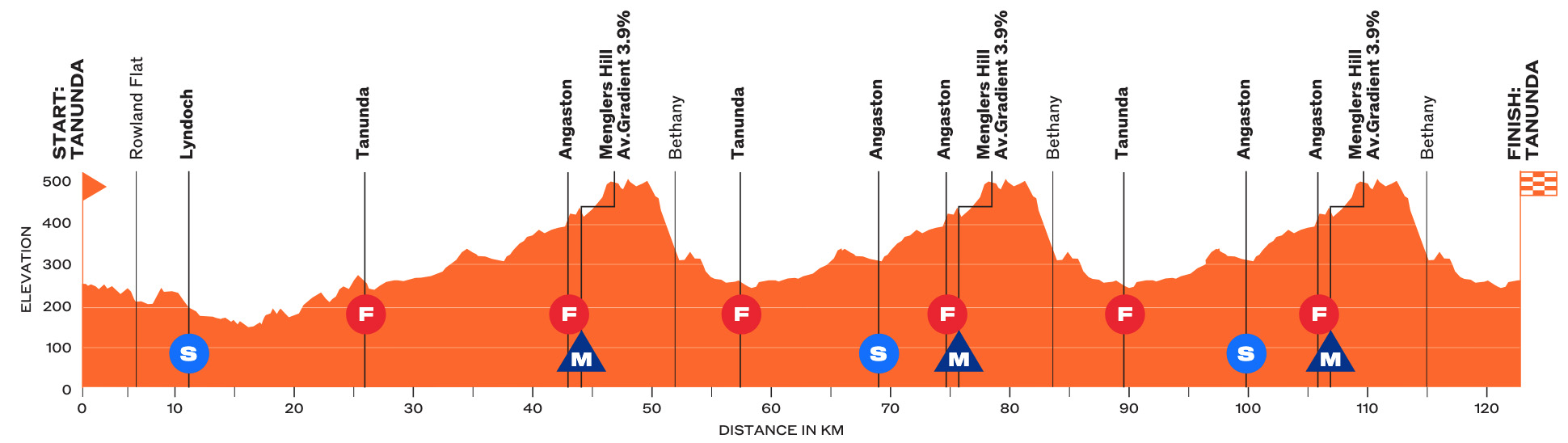
Stage 1 goes Tanunda. There is 1500m of climbing, decent for 120km in Janaury but it’s gradual. All the TDU race profiles here are generous with the y-axis, what looks spicy in the graphics is often a regular rise and Mengler’s Hill is a gentle 4% slope for most of the way. Recent visits to Tanunda have all seen a regular sprint finish and this feels even more likely given there’s only one stage left for the sprinters.
- Finish time 2.03pm – 4.33pm CET – 22.32pm EST (D-1)
Stage 2 – Thursday 22 January
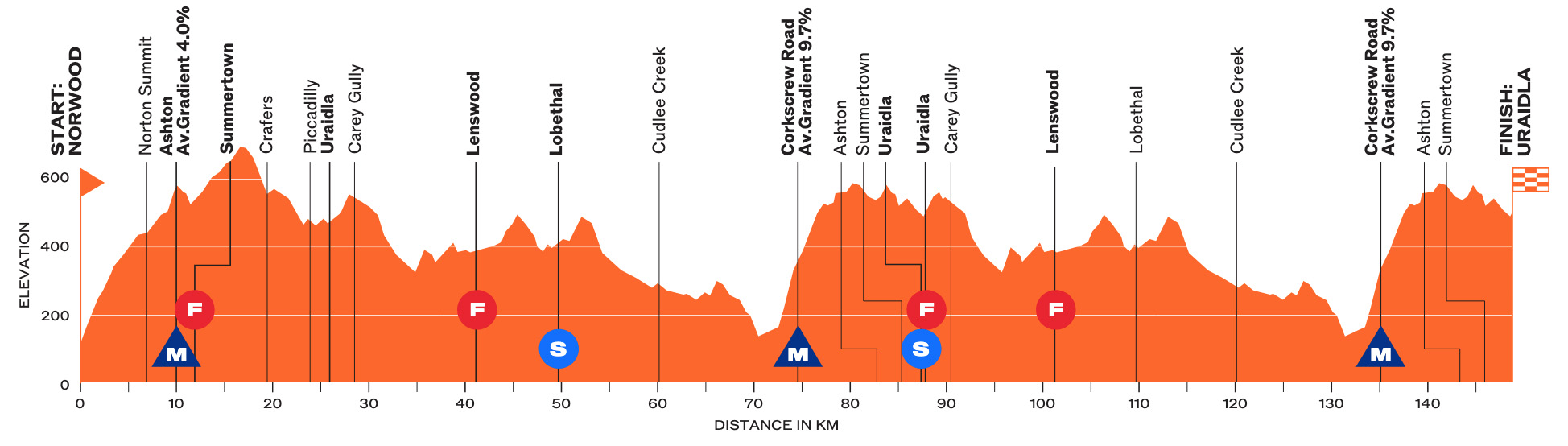
The Corkscrew climb is back. This time with an added twist because instead of taking a right turn at the top, it’s straight on towards Ashton and as the profile shows the route keeps on climbing. After a small dip there’s a sustained 7% section along the way but all on a wider road. In the past the Corkscrew summit has been a virtual finish line, get clear of the rest and the stage win and time gains awaited. Now it could be more tactical as there’s more climbing to go. The course won’t surprise any riders given they’ll all recon it and it’s done once mid-stage too. But all this means 3,600m of vertical gain for the day and makes the day harder and more selective still.
- Finish time 3.02pm – 5.32am CET – 23.32 EST
Stage 3 – Friday 23 January
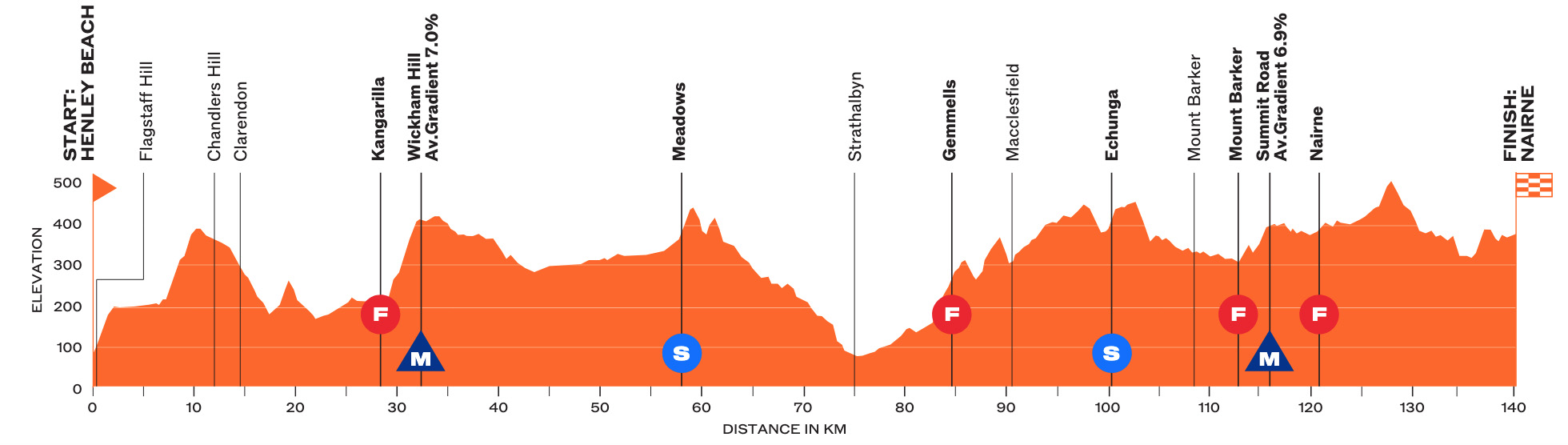
A new finish in Nairne and so a blank canvas as nobody has experience of racing this finish. There’s 2,500m of vertical gain but it should be a sprint stage, especially if the weather is calm. The unmarked climb of Military Road awaits and could see the heavier sprinters in trouble.
- Finish time 2.52pm – 5.22am CET – 23.22 EST
Stage 4 – Saturday 25 January
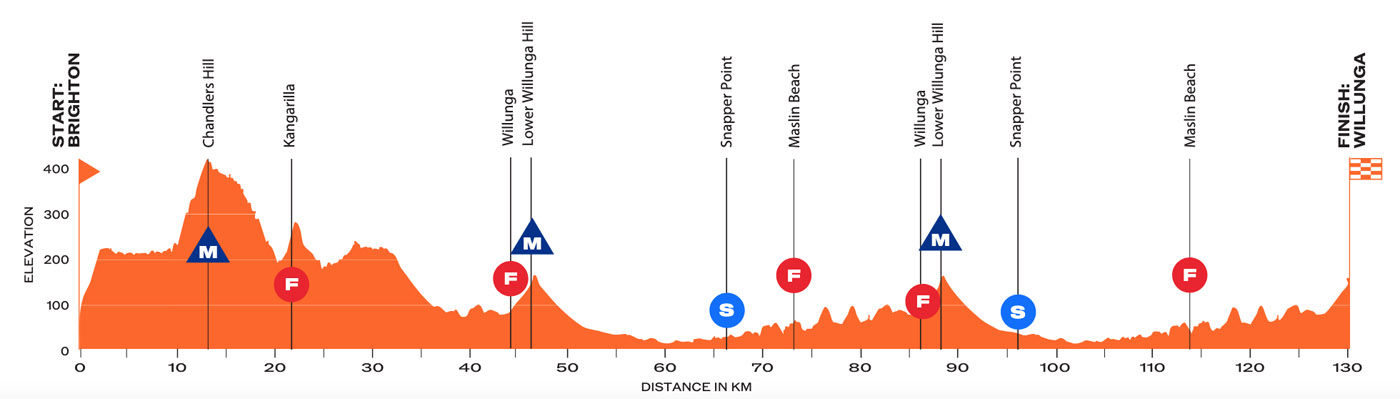
The classic Willunga stage with a trip to the coast and then racing through the McLaren vineyards. Watch out if the wind is up as riders can be caught out before the final climb. Old Willunga Hill is the key, it’s 3km at an average if 7.5%, a steady gradient and a wide road most of the way and exposed if there’s any wind. It’s a tactical climb, being on the right wheel matters as the speed is so high, the idea is to ride the slipstream of your rival and then strike out as late as possible but before everyone else.
Update: the Willunga stage but without Willunga Hill because of the forecast heat and forest fire risk. The stage will start earlier too with the finish in Willunga town, the same used by the women on the opening day / last time with the men when Bryan Coquard shot out of the bunch to win in 2023.
- Finish time: 1.22pm – 3.52am CET – 21.52 EST
Stage 5 – Sunday 26 January
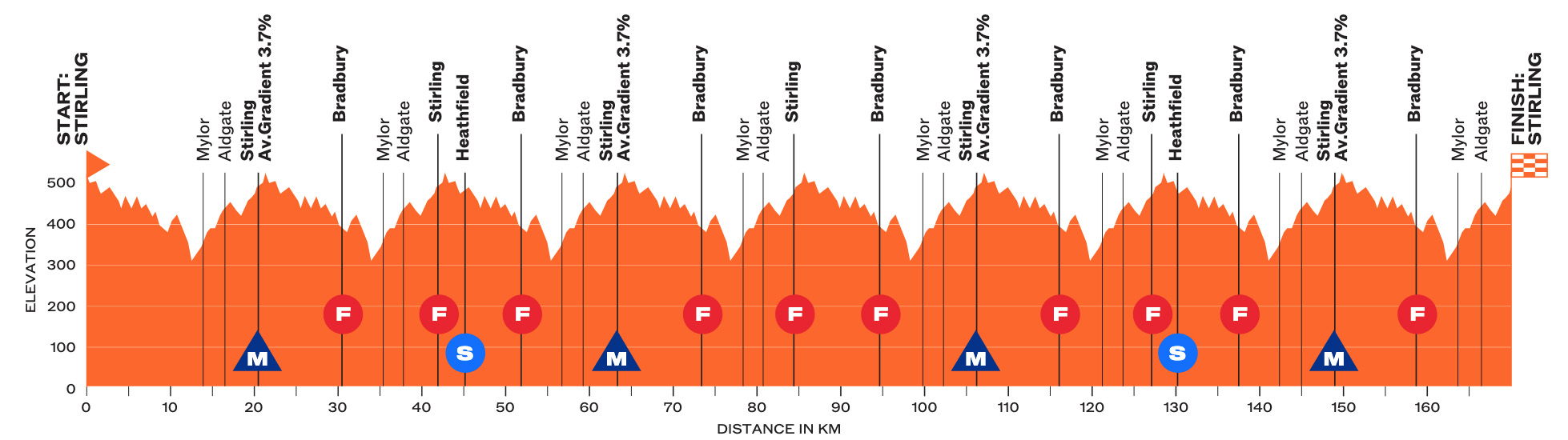
Another hilly day, this time 3,500m of vertical gain and relatively long at 170km. This features the regular road to Stirling seen in the past, a finish where Caleb Ewan has won before but also the likes of Diego Ulissi and Jay McCarthy, it rises to the line then drops before kicking up again and timing counts. This time even Ewan in his pomp would struggle given the repeat efforts and distance.
- Finish time 3.26pm – 5.56am CET – 23.56 EST
Time Bonuses
There’s 10-6-4 seconds at the finish line and 3-2-1 seconds at the intermediate sprints.
Comment
Social science academics have an old joke that the set the same exam questions every time because it’s the correct answer that changes each year. The TDU has been similar, the same roads every year but the winner is usually different.
Having complained the race is too scripted and that you rarely need to tune in earlier than 10km to go (see “Tour Done in Under 15 minutes“), the organisers have made the course harder and it could pay to watch more this year. This blog’s rantings probably didn’t provoke the change but it’s more than welcome. The race has had 3-4 sprint finishes in the week, now it’s two at most.
If it’s harder but we’ll see if the script changes. You normally see a rider from the Australian team go up the road to take mountain points early and they’re brought back in time for the action 15 minutes from the finish.
One way to settle questions of whether the race is as fierce as the rest of the World Tour events (Guangxi excluded) is to measure of the intensity of racing with calories consumed per hour as a proxy for this. For all the high energy racing in recent years the TDU has been less energy intensive but that’s changing and it’ll be good to monitor although the temperature can affect this too.
TV: it’s live on Seven for Australians (free streaming, email sign up required) and VPN users looking for English coverage. Eurosport for most of Europe, it’s on Peacock and Flobikes in the US and Canada, J-Sport in Japan. The race website lists more countries.
You might have noted the timings above where Stage 1 is supposed to finish at 2.03pm rather than 2.00pm. Obviously this will vary according to the mood of the peloton and the weather. Any Europeans setting their alarm clocks normally need to wake up 30 minutes before the scheduled time, see how far there is to go and then decide whether to snooze or get up; but with more climbing this time and especially for the last stage it could pay to rise and shine earlier.
The Contenders
As a curtain raiser for the season this often a subtle race with the tactics of a points race on the track as riders making small moves here and there and win overall thanks to time bonuses rather than audacious attacks, and even resorting to countback when tied on the same time. The 2026 edition is harder and should prove more selective.
Jhonatan Navarez (UAE) won last year and has a good chance of repeating, he can win and place on the hilly stages. Team mate Jay Vine is the form pick having won the Australian time trial championships again and while he’s not the first choice for racing finesse, the course here has wide roads which can suit if he gets a gap uphill and has Narvaez sitting on to play the sprint card from a small group. Adam Yates races too.
Finn Fisher-Black (RedBull) was third last year and returns with a strong team. He’s suited to this kind of racing, has enjoyed a summer build-up but is still an infrequent winner.
Javier Romo (Movistar) should have won last year. He took a stage and then while in the ochre jersey, made a solo attack on the middle slopes of Willunga. It was brave but ruinous as he got reeled in and overhauled. His problem is that while he could still barge away he will be marked more.
Jayco-Al Ula have been flame-grilled on the barbie of public opinion in recent days after their men’s performances in the national championships. Ben O’Connor would like much longer climbs but he’s an aggressive rider who will make a go of it. Luke Plapp can place on stages but how to win them outright? Go solo of course but easier said than done. Mauro Schmid is due a big win.
Lennert Van Eetvelt (Lotto-Intermarché) ought to be made for a course like this but it’s January and form unknown. Santiago Buitrago (Bahrain) will find the hillier course better but he’d like even more climbing. Corbin Strong (NSN) would have been an easier pick in past editions as he could place on sprint stages to take time bonuses, now he’s got to climb more. This is where Matthew Brennan (Visma-LAB) comes in as he has range but similarly Willunga and the Super Corkscrew ought to be too much.
Finally three smokeys in Andrea Bagioli (Lidl-Trek), Simone Velasco (XDS-Astana) and Andreas Kron (Uno-X), the latter suited to uphill finishes he’s been plagued by injury and illness but returns healthy now. The race is open to plenty more but that’s enough names for now…
 |
– |
 |
Narvaez |
 |
Fisher-Black |
 |
Schmid, Van Eetvelt, Brennan |
 |
Buitrago, Strong, Plapp, O’Connor |
Weather: warm but not infernal, typically 27-32°C in the afternoons with some cloud but the long term forecast suggests it could jump to 39°C on the final day. Typically a 15-20km/h wind from varying directions each day so just a breeze more than a menace or an opportunity.
I may be losing my grip but I think the prologue is on Tuesday etc.
I tried to come up with a line about TRex but failed.
That social studies exam joke is funny.
Taht Australian’s NC final 10-12 ks was relaly something. What on earth went through the minde of Plapp is beyond me. Never take a “belgian” to the line… And poor Durbridge. I guess the team buss must have been awfully quit on the way back from racing.
I think Plapp was probably asking himself why he gifted the race to Durbridge last year.
Interesting to read that Vine claims to have sacrificed himself to keep the race alive. It was a race with a lot of moving parts.
IR must be right that all stages – and the GC -are accessible to riders other than pure climbers. Witness Matthew Holmes Willinga Hill victory over Richie Porte in 2020.
Another tantalising aspect is our ignorance of rider’s form. How many are down under simply for some agreeable clement weather training and who is targeting the race with an early season form peak? We’ll start to see tomorrow.
It’s hard to predict form at the best of times. You can see some riders training in Australia since early December and others who live in the southern hemisphere or tropics… but there are some riders who fly in from Europe with a few days to go and thrive too, especially as the race is about 6-7 minute efforts like Corkscrew and Willunga and sprinting.
Nice to get a new season underway. I have followed pro racing for 45 years or so and have to say that your blog has made for very enjoyable reading, so thanks very much for that. Re: “Having complained the race is too scripted and that you rarely need to tune in earlier than 10km to go,” I watched the entire W’s stage today and it was like watching paint dry until they reached the Corkscrew. Not necessarily faulting the strategic imperatives, but the course certainly made for a processional.
That sort of does describe most stage race courses though. If the riders don’t make a race of it – it won’t happen.
Often the best part of a tdf stage is the flat boring start because a large number of riders are trying to make a break. So its the riders that make the race.
A one day race can be raced more aggressive and the course harder because there’s no need to back up.
That said i don’t understand the 3 day race for the woman’s event. I’m sure the South Australian state government forks out a lot of money for this race so it makes no sense the race being several days shorter. A real missed opportunity for equality. An extra 3 days and the 1 or 2 strong ladies team maybe can’t control quite as well and stifle the race. I didn/t watch the race but when i have watched ladies races in the past they really suffered because one team can shut down the entire race and didn’t even need to let a break go.
In the prologue it appears that Brennan made a pacing error being fastest at the first split – and 2% faster than the eventual stage winner – before fading to an eventual 29th. Was he too confident or did he suffer a technical problem?
Jay Vine will be satisfied among the GC hopefuls.
30 degrees is the total opposite of the blizzard outside here.
Nice to see Michael Leonard did well in the prologue for his new team and wears the young rider jersey. He seems to be trying to specialize in TTs.
Great first stage! Would love to hear from Cadence or any other Aussies about how it looks from there. Seems like a great event.
You can debate about the quality of the field and the difficulty of the race but the thing about it is that the locals get behind it and it does provide a showcase. The only thing that preys on my mind is the possibility of stinking hot weather.
Theres some hot weather coming. Friday to Sunday prediction is 35 – 42 – 35.
It will be dry heat at the hottest point so there’s at least that i guess. Personally i don’t enter any event in SA or Victoria during January or Feb. The chance of super hot temperatures and or bushfires ruining your plans is high.
I guess they don’t have much choice on timing.
I sometimes laugh about what Europeans consider hot, but riding a bike at 40°C is legitimately awful.
The forecast is looking horendous. 42 on Saturday. Is it a possibility the stage will be cancelled? Doesn’t seem at all sensible to be racing a bike in that heat. Or start at 6.00am?
In my mind they should start early but for some reason (sponsors presumably) this is never possible.
Spain has a similar problem.
It’s hard to reschedule the race, to move road closures and TV schedules but the final stage is on a circuit so at least easier to adjust the timing.
The UCI’s heat protocol will come in and adjusts for humidity (the “wet bulb” temperature is used) and a range of measures from allowing more drinks to be handed up to neutralisation of some parts and all the way to cancellation.
Temperature forecasting is quite good these days so they know it is going to be 42 deg on Saturday. With three and a half hour stages I can’t see that it would be a big deal to bring the start forward to 8:00 am so that they avoid the worst of it … plus better fo the spectators I think.
“Neutralizing” one out of five stages is a big discount.
It’s not going to be over 40°C in the area of the stage (further south and near the coast, about 4°C cooler than Adelaide) at the time of the stage (it will finish before the temperature peaks in the late afternoon) on Saturday. Further to that, it’s going to be a light heat without humidity so there’s a strong chance the WBGT will be low 20’s at most.
I expect the only necessary modifications to be extending the time for refreshments from the team vehicles. This stage already has more feed zones than the mandatory amount under the updated UCI guidelines introduced last year, but adding an extra optional feed zone halfway around each of the Willunga-Aldinga-Tatachilla loops might also be possible.
BOM says 42 deg for Willunga.
That is AI slop which was created by the consulting firm Deloitte as part of the new BOM website, Willunga does not have actual forecasts signed off by meteorologists.
The WBGT will probably still be in the safe range even if the air temperature does go that high, but I reckon the race organisers will be proactive and allow the extra feed zones even though the mandatory threshold won’t be reached.
As a spectator I’ll still be going. It will be nice at a couple of hundred metres worth of altitude with the sea breezes flowing.
Everything’s AI slop these days, including things that aren´t even remotely AI 🙂
Yr.no forecasts 40 °C for the last half an hour or so.
PS I’m a northern boy and my experiences of hot temperatures are fairly limited – in fact I’m yet to find myself in as many degrees above zero on the Celsius scale as I’ve been in minus degrees – but when it was +32 °C the breeze didn’t help at all. But I suppose that in this connection, too, location is everything (and humidity practically everything)…
40C if its dry is not to bad for just riding around if your fit. Can actually be enjoyable.
Riding hard however is a bit stressful. Riding uphill and hard when its 40 is terrible because of the lower speed.
I would rather ride at 40C dry and 30 and humid.
I would think that for most of the peloton it would be ok as long as the proper precautions are taken (e.g., extra hydration zones, panty hose with ice), but whether it’s super hot or super cold there always seem to be a few riders who suffer especially badly. I have definitely done some riding at 40+ degrees and the flat kms aren’t that bad, but the climbs are miserable. And I’m not even trying to beat anyone!
News and the Willunga stage will happen without Willunga Hill because of the forecast heat and forest fire risk. The stage will start earlier too with the finish in Willunga Town, the same used by the women on the opening day / last time with the men when Bryan Coquard shot out of the bunch to win in 2023.
It is going to be 40 deg by 12:30 so I don’t see how it can work. Racing in 40 deg plus temperatures seems impossible.
Total nonsense. It reached over 42C at Noarlunga last Saturday, which is cooler than Willunga. Regardless, it was all about the fire danger rating. The Fire Behaviour Index for the Mount Lofty Ranges region for that day was 96, trivially short of the Catastrophic level. Having spectators on Willunga Hill, a massive fire trap, would have been spectacularly irresponsible. Thankfully the Country Fire Service and SA Police put a stop to it.
Look on the bright side – however high the temperature gets for the rest of the week at least it won’t be as much as the gaps on GC after today’s stage.
Interesting to see Groupama-FDJ do well in the sprint. Lewis Bower may be one to keep an eye on!
So is Saturday just another sprint stage now?
In a word: yes. But it’s got some climbing and the finish is uphill so there’s a good chance of a different winner. Brennan comes to mind if he can sort his leadout.